
 Indonesia

Culture
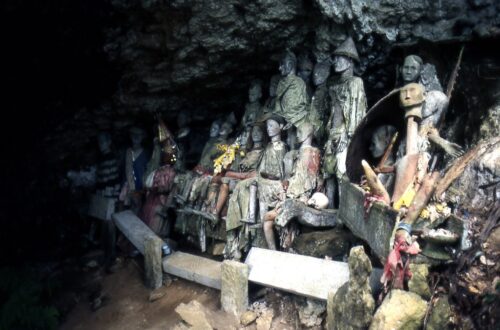
Tau-Tau, Toraja Ancestors Figure
Apr
The Toraja ethnic group, living in the northern mountains of South Sulawesi, until today still adhere to their age-old beliefs, rituals and traditions. Uniquely, to the Torajans, death has always been a central theme, where in addition to the well-known elaborate funeral ceremonies, Torajans also honor the deceased by carving out the likeness of the dead, known as Tau-tau.
Tau-tau are a type of effigy made of wood or bamboo. They are particular to the Toraja ethnic group in South Sulawesi, Indonesia. The word “tau” means “man”, and “tau-tau” means “men” or “statue”.
This statue is known in Toraja society as a personification of the deceased. The making of this statue is bound by various religious provisions: starting from selecting and cutting down the jackfruit tree; manglassak, a rite to determine the gender of the doll being made; disabu, a rite to consecrate the tau-tau. Tau-tau is made by a special artisan sculptor.
In the Torajan culture, The statue made must resemble the deceased. They were once made only for nobles or tana’ bulaan, the reason is that the statue is a representation of the deceased and therefore must be worshipped according to his status. Tau-tau statues are usually found near where the body of the deceased has been laid to rest. As a representation of the deceased, Tau-tau are also regarded as guardians of the tomb as well as protectors of the living. In so doing, they preserve the link between the dead and the living.
History
In the early 1900s, with the arrival of the Dutch Christian missionaries in Toraja, the production of tau-tau was somewhat dampened. At the 1985 synod of Toraja Church in Palopo people debated if Protestant Toraja could have tau tau at their funerals.
Torajans believe that the dead can take their possessions with them to the afterlife, and the effigies are usually equipped with small possessions. In the 1980s, the wooden effigies became a target for grave robbers who looted and possessions kept with them and sold the figures to museums. Tau-tau can now be found in Jakarta, Europe and America, and were once even on display at the Smithsonian Institution in 1991.
In response to this plunder of the ancestors, the Torajans hid their tau tau in various undisclosed locations. They also installed metal fences surrounding their cave graves to protect the tau tau. It is somewhat ironic that the tau tau are meant to represent the deceased protecting the living, but they now have to be protected against the living.
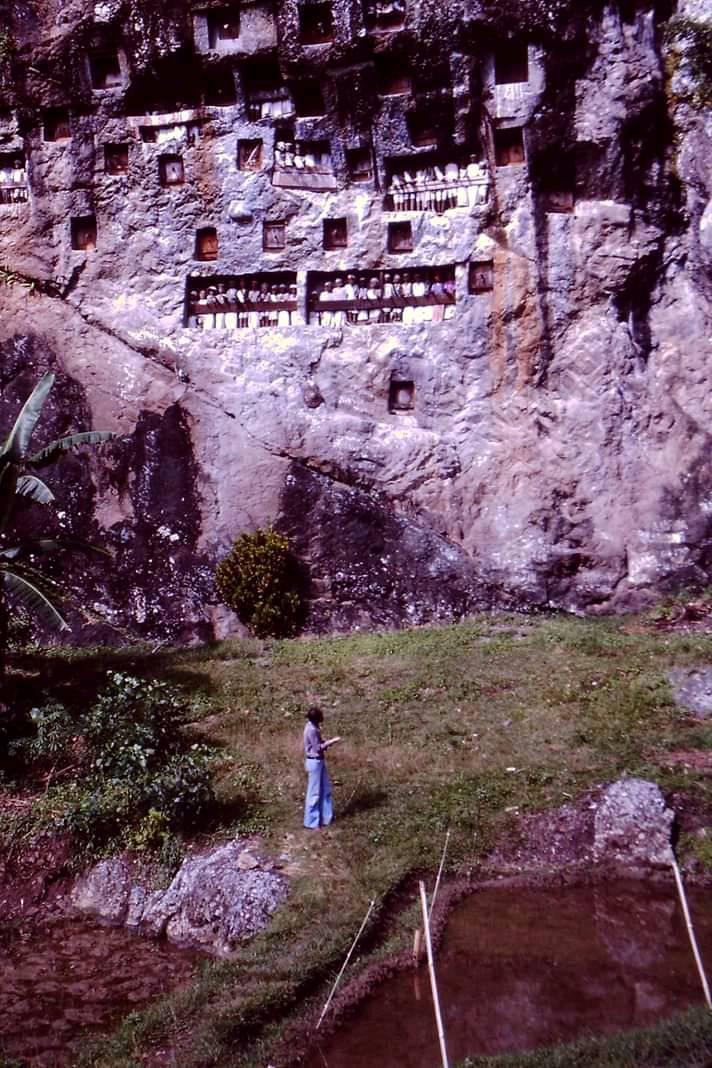
Traditionally, the effigies were simply carved, only to show the gender of the deceased. However, they have become more and more elaborate, actually attempting to imitate the likeness of the deceased. Nowadays, tau tau have a photographic likeness to the people they represent. They are carved with wrinkles and carry items like Bibles.
The types of wood used for the effigies and what they are clothed in also reflect the status and wealth of the deceased. Tau tau of the wealthy would generally be made of wood from the jackfruit tree. They are usually permanent statues that can be found standing at the entrance of tombs, which are carved out of the rock faces of Toraja.
Their position, in reference to the other tau tau, in the rock face would indicate the status of the deceased. The cave builders usually require payment of several buffalos that only the sufficiently wealthy can afford. The less wealthy elites generally have their tau tau made from bamboo, which will be undressed at the end of the funeral, leaving only the bamboo on the ritual field. There are regional variations in the types of tau tau used, also.
Materials Used Making Tau-Tau
Tau-tau consists of a body, hair, and eyes. The body is made from jackfruit wood. The hair is made from pineapple leaf fibers. The eyes are made from buffalo bones and horns. The body of the tau-tau, made from jackfruit wood, is generally only used by high-ranking nobles. This material is more durable. For lower-ranking nobles, the body is made from bamboo or kapok wood.
Making process
Tau-tau are only made by a special artisan called a Topande. Making tau-tau begins with cutting down the wood from which it is made. The wood is then carved into tau-tau. Before carving, the Topande asks a family member who is related to the deceased to describe their personality while alive. During the carving, animals are slaughtered and offerings are made to the deified ancestors. This procession continues until the tau-tau carving is complete.
A common offering made during the process of felling a tree for the tau-tau wood is a pig. The number of offerings given can reach five pigs because every joint of the tau-tau’s body must be given an offering. The processing time can also reach 1.5 months if the level of complexity of the carving is high. The time can increase to 2 months if the tau-tau is carved complete with its clothes. The tau-tau carving is made to be as similar as possible to the original face of the deceased.
Symbolism
Tau-Tau in Banua Layuk Traditional House (Mamasa)
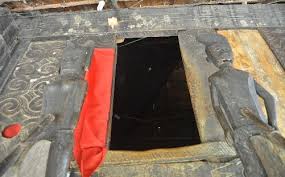
In the Banua Layuk traditional house in Mamasa Regency, there are two tau-tau. They are carved at the front entrance. One tau-tau represents a man, and the other a woman. Their presence symbolizes that the Banua Layuk traditional house is always ready to solve the problems of the residents of Mamasa Regency and improve the well-being of its residents. These two tau-tau are also used as symbols to ward off evil spirits that could disturb the peace of the homeowners.
Tau-Tau at Funeral Ritual (Rambu Solo)
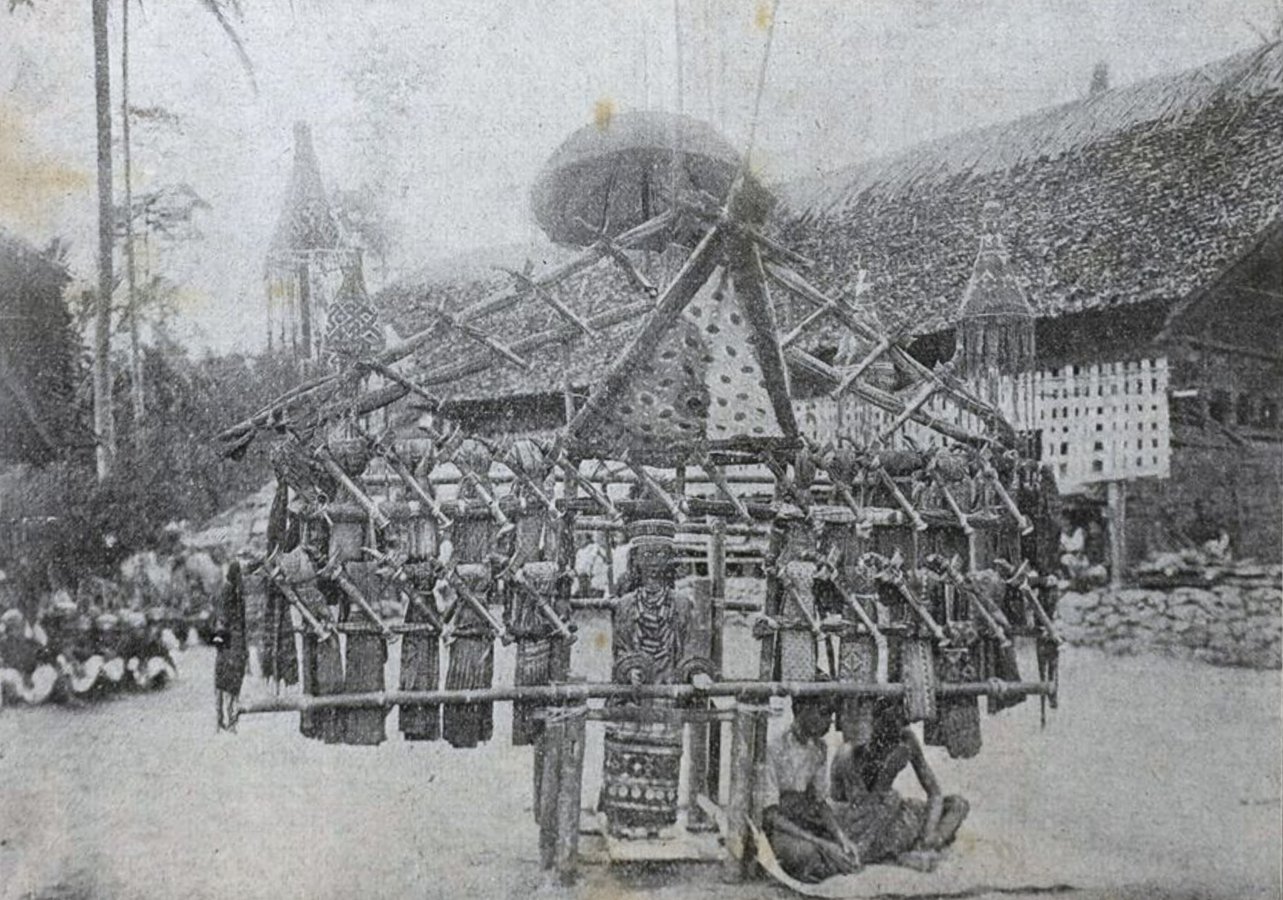
Tau-tau is only used for death rituals for Torajan nobility. The noble caste that can use tau-tau is tana’. This caste is divided into tana’-bula’an and tana’ bassi. The placement of tau-tau must first go through a certain ritual called rapasan. The tau-tau is carried along with the duba-duba until the Aluk rante ritual begins. In Aluk Todolo, the tau-tau will be changed and its clothes cleaned during the Ma’nene ritual.